
Redesigning qualitative data management for impact foundations
Stories 2.0
OVERVIEWMy role
Research
Product Design (Lead)
Team
Product Manager
Engineering
Client Management
Company
UpMetrics
Company
UpMetrics
BRIEFCapture and report on more meaningful ROI data so that Lingo Live coaching programs expand faster
Overview / The short version
Foundations were exporting qualitative impact data to Google Sheets just to make sense of it. I led design on a full rebuild — story creation, tagging, and a real path into Advanced Analytics — that closed the gap and helped retain a major at-risk client.
The problem
Foundations collected qualitative stories but had no way to label, organize, or analyze them in-platform.
Everything routed manually through Google Sheets — a real operational bottleneck.
The stakes were explicit: a major client was at risk without a fix.
My approach
Two research touchpoints, not one:
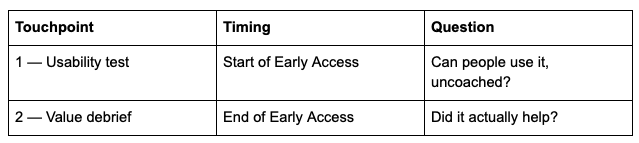
I protected this order deliberately — first-contact confusion can't be recaptured once someone self-teaches the interface.
5 participants · 3 organizations · real workflows, not synthetic tasks.
Also grounded in real usage data, not just impressions: audited Ford's actual tag usage (136 tags → cut to 81 after removing low-use ones) to recommend concrete taxonomy limits — 13–15 groups org-wide, max 15 tags per group.
OUTCOMES4 of 5 participants enthusiastically ready
80% target met
OVERVIEWProgram Designer
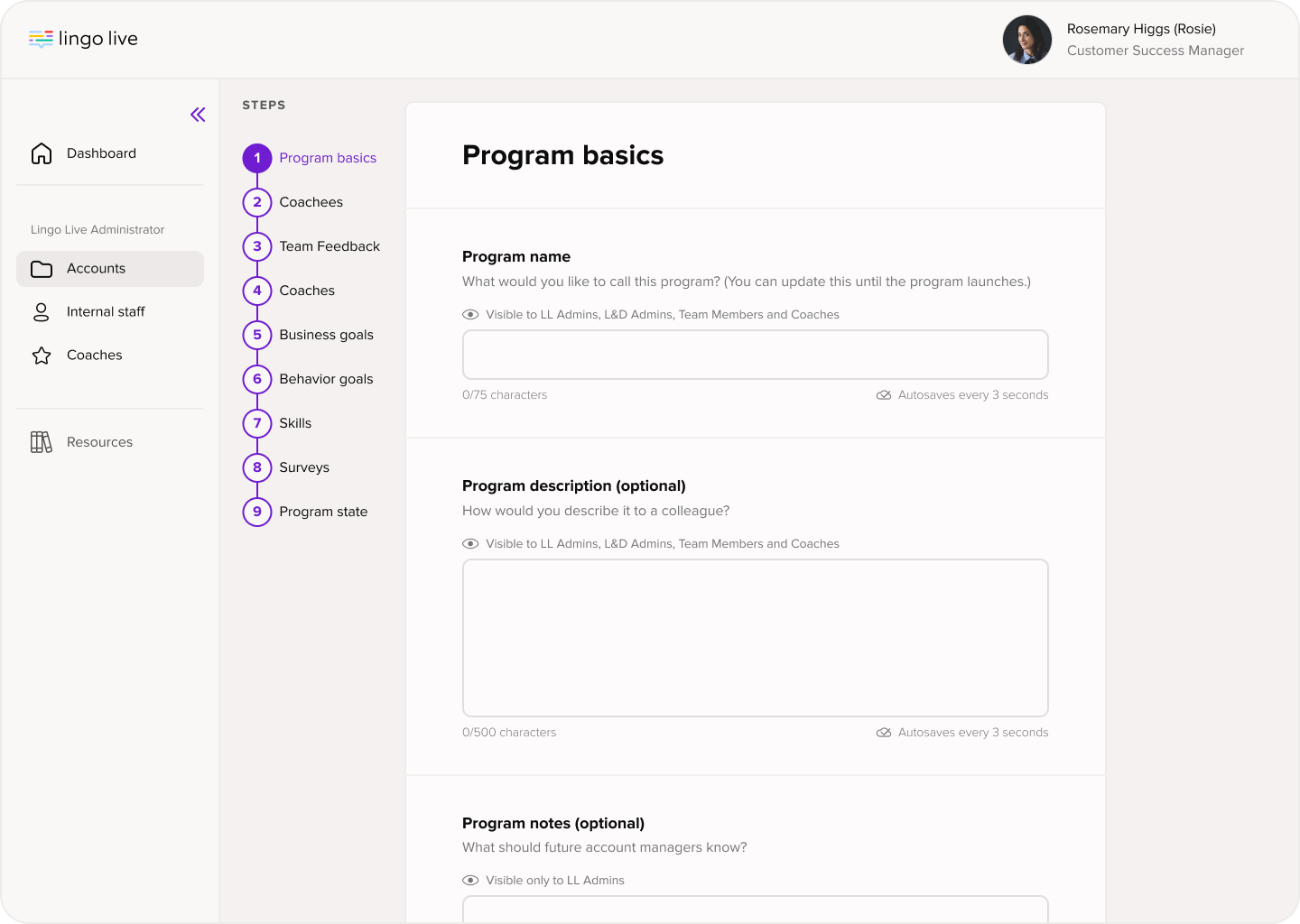
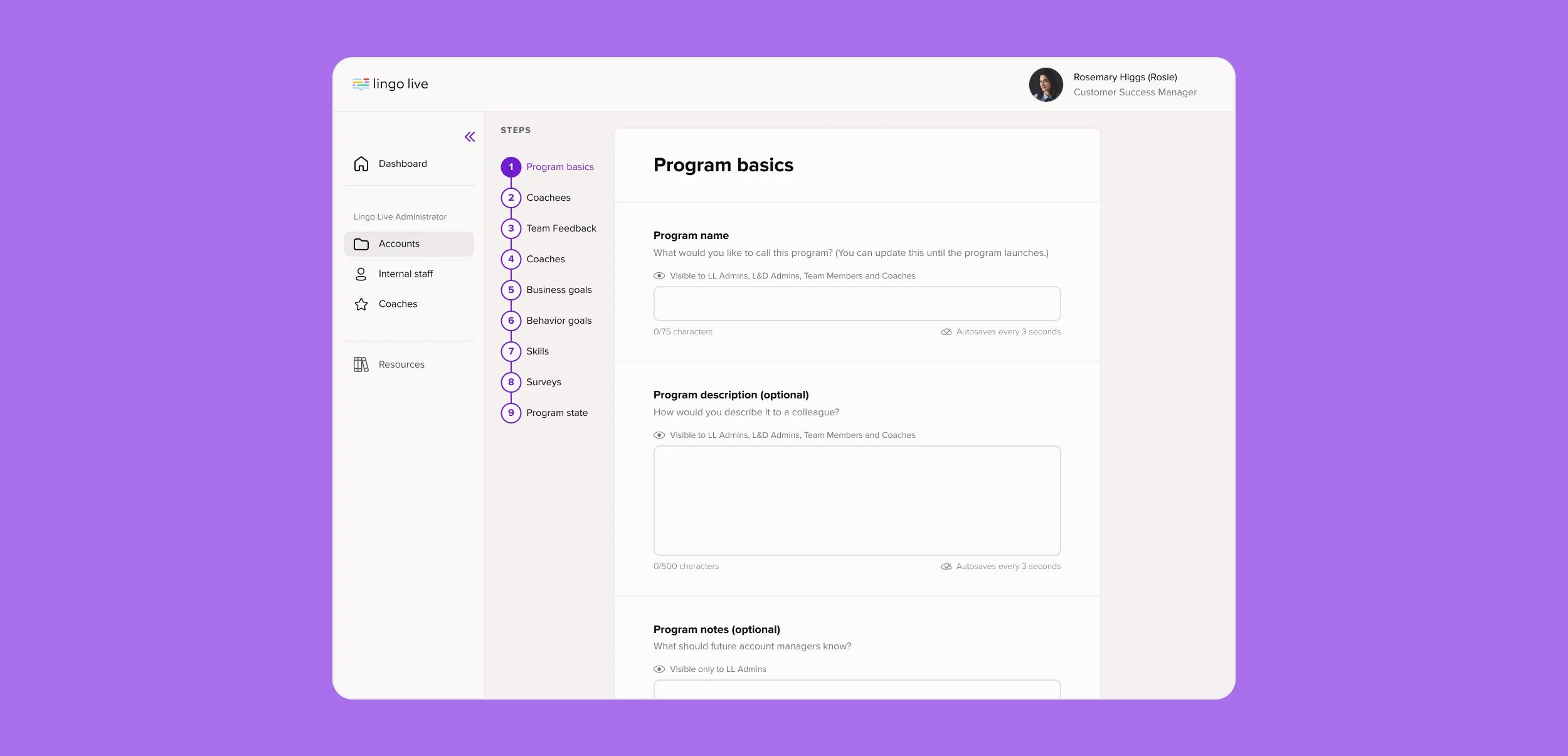
Lingo Live Admin capturing client information for a new program.
Survey Builder

Lingo Live Admin creating a survey for a new program.
Results pages
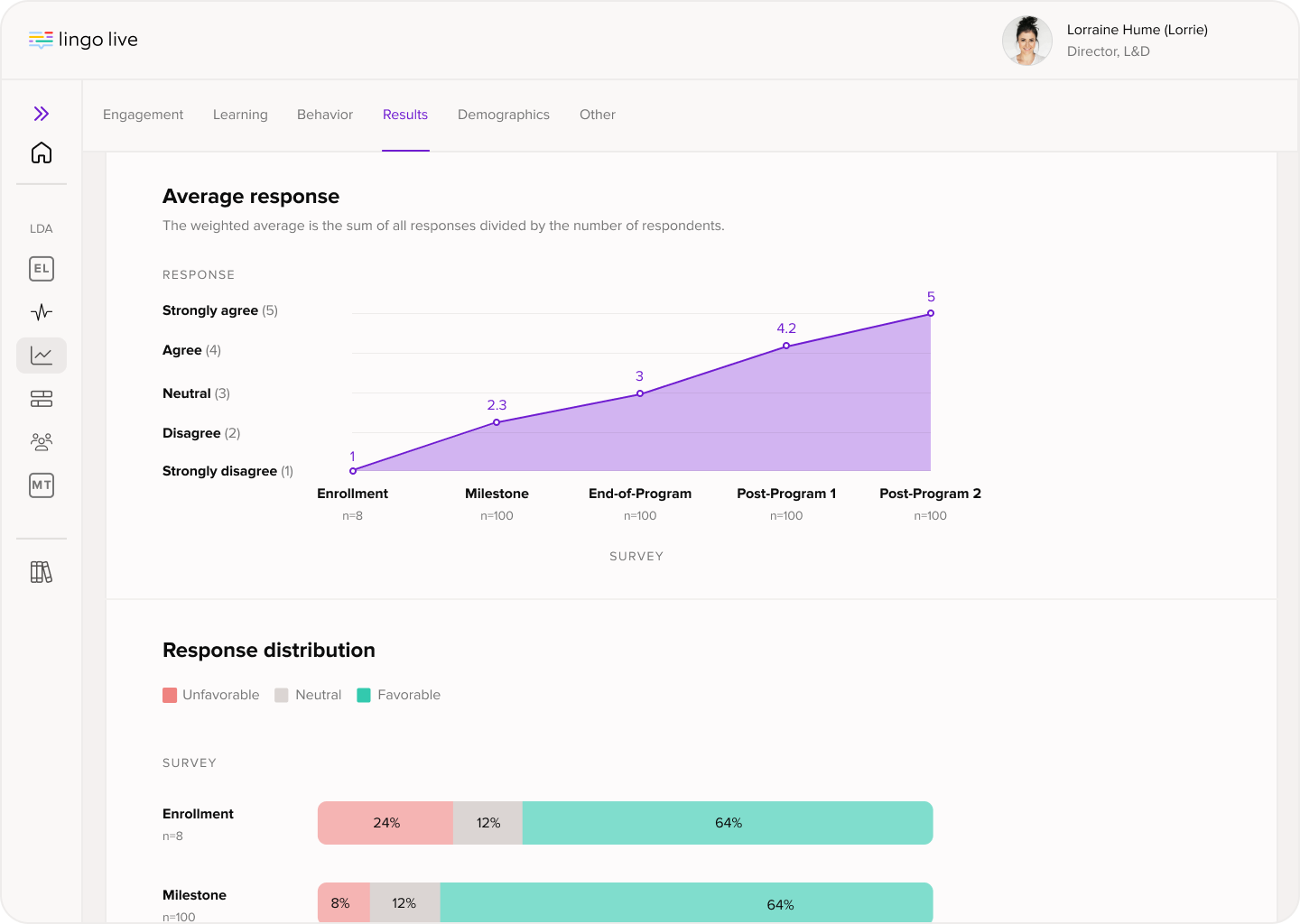
L&D Admin reviewing survey responses segmented my data type.
Engagement pages
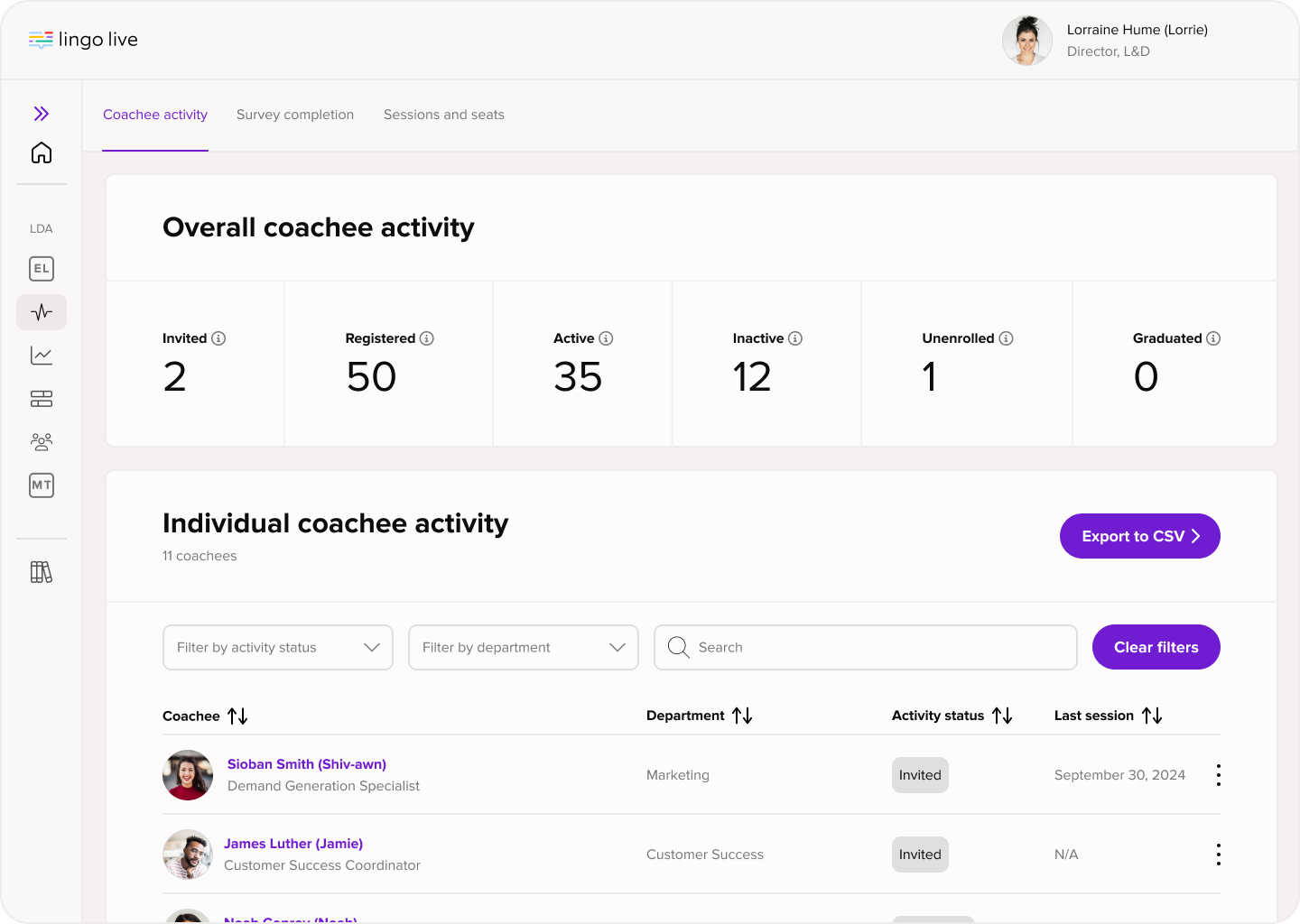
L&D Admin checking to see whether she has unused sessions she can reallocate.
Coachee notebook
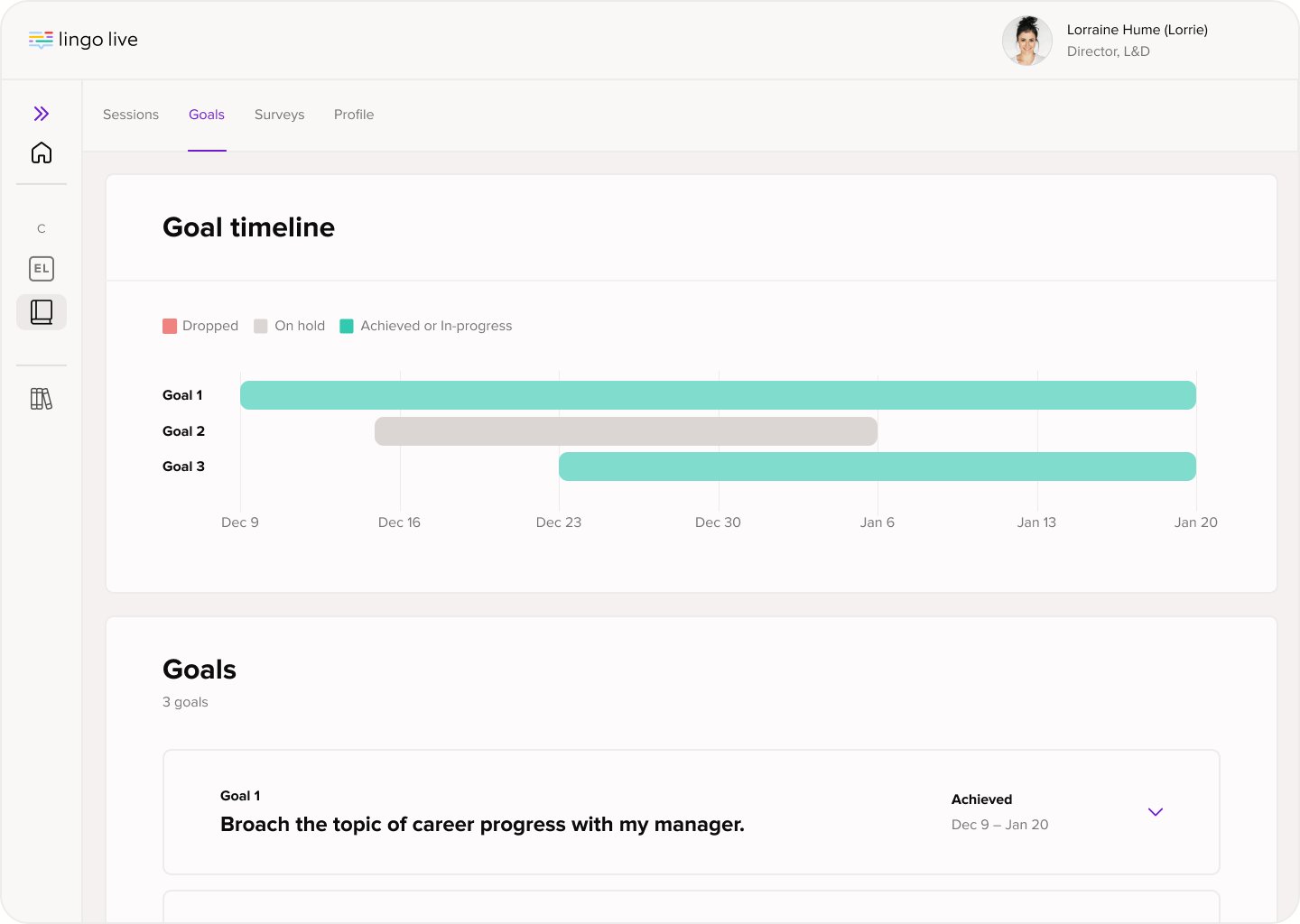
L&D Admin reviewing coachee notebook for in-depth content information.
Let’s dive into Program Designer in more detail. Shall we?

DEEP DIVE
Program Designer
Set programs up for success with a structured, repeatable launch process
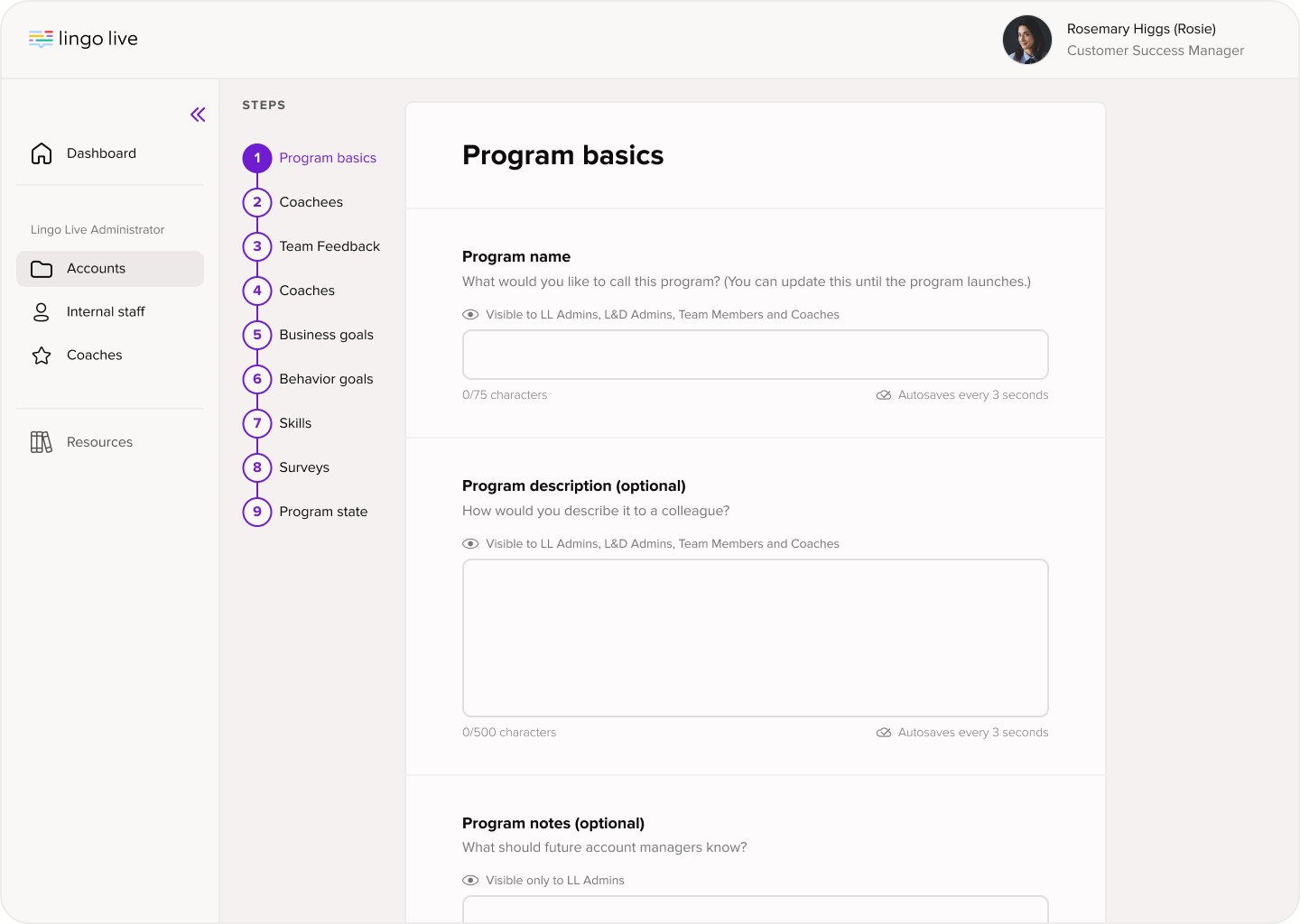
Lingo Live Admin capturing client information for a new program.
The personasProblemUnfocused programs. Programs were often not aligned to client goals.
GoalFocused programs. Consistently align programs to client goals.
The user flows / Maybe use screens to showThe sketches and wireframes / Possible directionsThe solutionA structured, repeatable launch process
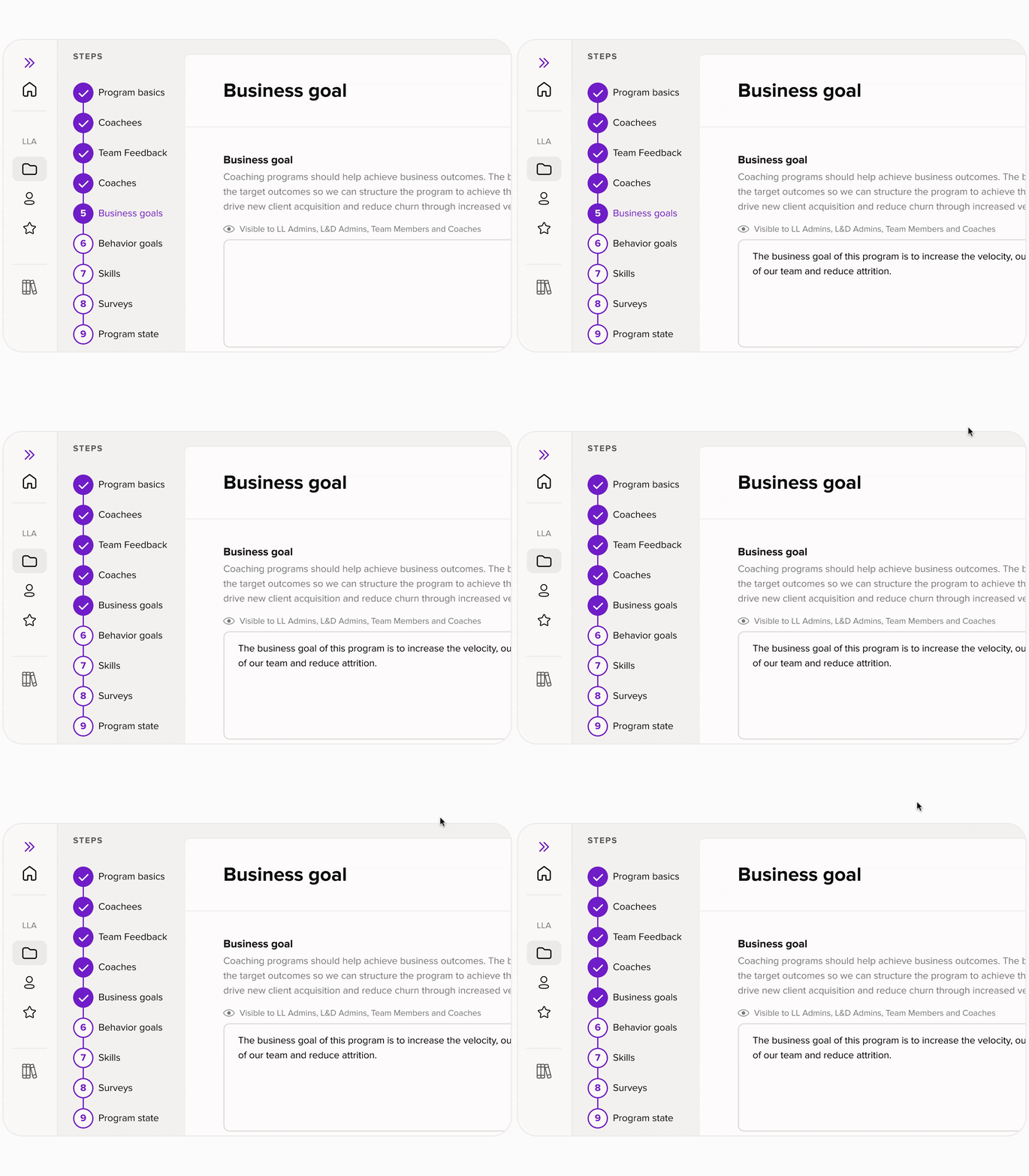
The checklist functionality prompts account managers to collect program goals, recruiting plans, and other strategic information from before a program launches—every time.
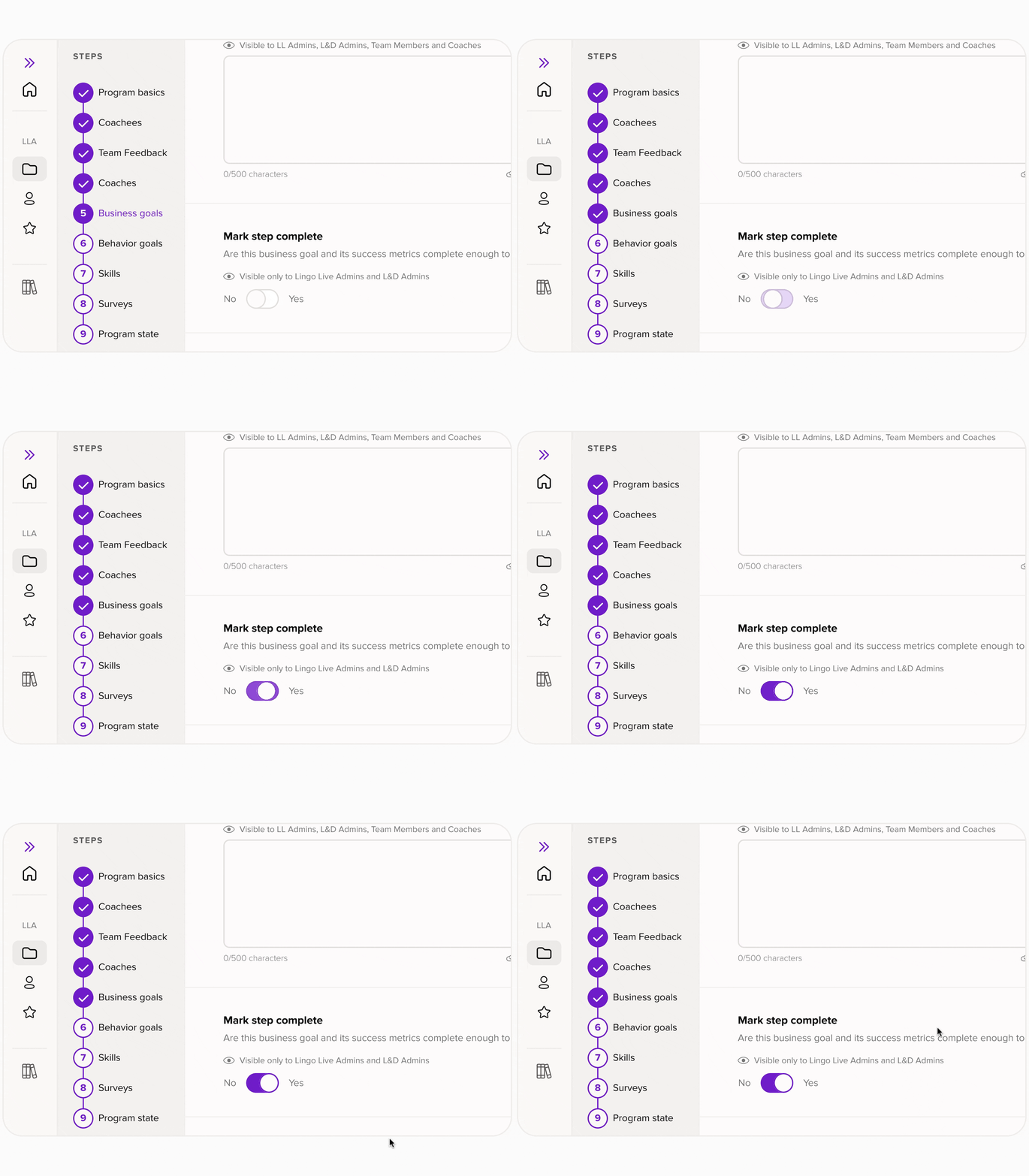
A record of incomplete information
Designing a program involves multiple conversations and a lot of thought. The “mark step complete” functionality allows account managers to ensure nothing falls through the cracks.
“Sometimes clients aren’t sure of the value coaching will provide to the business, but once I walk them through the program design process on the app, they’re like, ‘Oh, okay. I get it. This is great!’ It really speeds things along.”
Kyle, Head of Strategic Accounts (Lingo Live Admin), Lingo Live
LEARNINGS
01User research is critical
When we listened to our users, we realized that our planned solution was totally inadequate. If we had more time, I would have tested each feature with users and iterated on them.
02Business goals are key
On the other hand, it wouldn’t matter how much our clients loved our platform if it didn’t cause them to expand their programs eventually, we wouldn’t be able to provide those programs anymore.
03Knowledge is progress
Many of these features did not ship while I was at Lingo Live (due to an acquisition by a larger learning company), but the learning was valuable, and we definitely would have built on it if we continued.